It starts quietly.
The 3 PM crash that sends you hunting for something sweet. The belly weight that showed up a few years ago and refuses to leave, no matter how many salads you eat. The brain fog. Waking up tired after a full night in bed. Then you finally see a doctor, your labs come back "fine," and you are told to eat less and move more.
If that sounds familiar, we want you to hear this clearly: you are not imagining it, and you are not lazy. Very often, what you are feeling is your metabolism asking for help years before a diagnosis ever shows up on paper.
November is National Diabetes Month. At Live In Vitality in Brandon, we see it as an important reminder that type 2 diabetes rarely arrives overnight. It builds slowly, often over a decade. That means there is a window of time where we can change the story. This article is about that window.
The Numbers Most People Never Hear
According to the CDC, more than 1 in 10 Americans have diabetes, and more than a third of adults have prediabetes. Here is the part that stops people in their tracks: more than 80 percent of adults with prediabetes do not know they have it. And nearly 1 in 4 adults living with diabetes has not been diagnosed yet.
Think about your next family gathering. Look around the table. Statistically, about one in three of the adults sitting there has blood sugar that is already heading in the wrong direction, and most of them have no idea.
Risk is not evenly shared, either. Research using national CDC data found that Black, Hispanic, and Asian adults have a significantly higher risk of prediabetes than White adults. Here in Tampa Bay, with our beautifully diverse community, that matters. Many of our families carry this risk without anyone ever naming it.
Insulin Resistance: The Root That Grows Before the Diagnosis
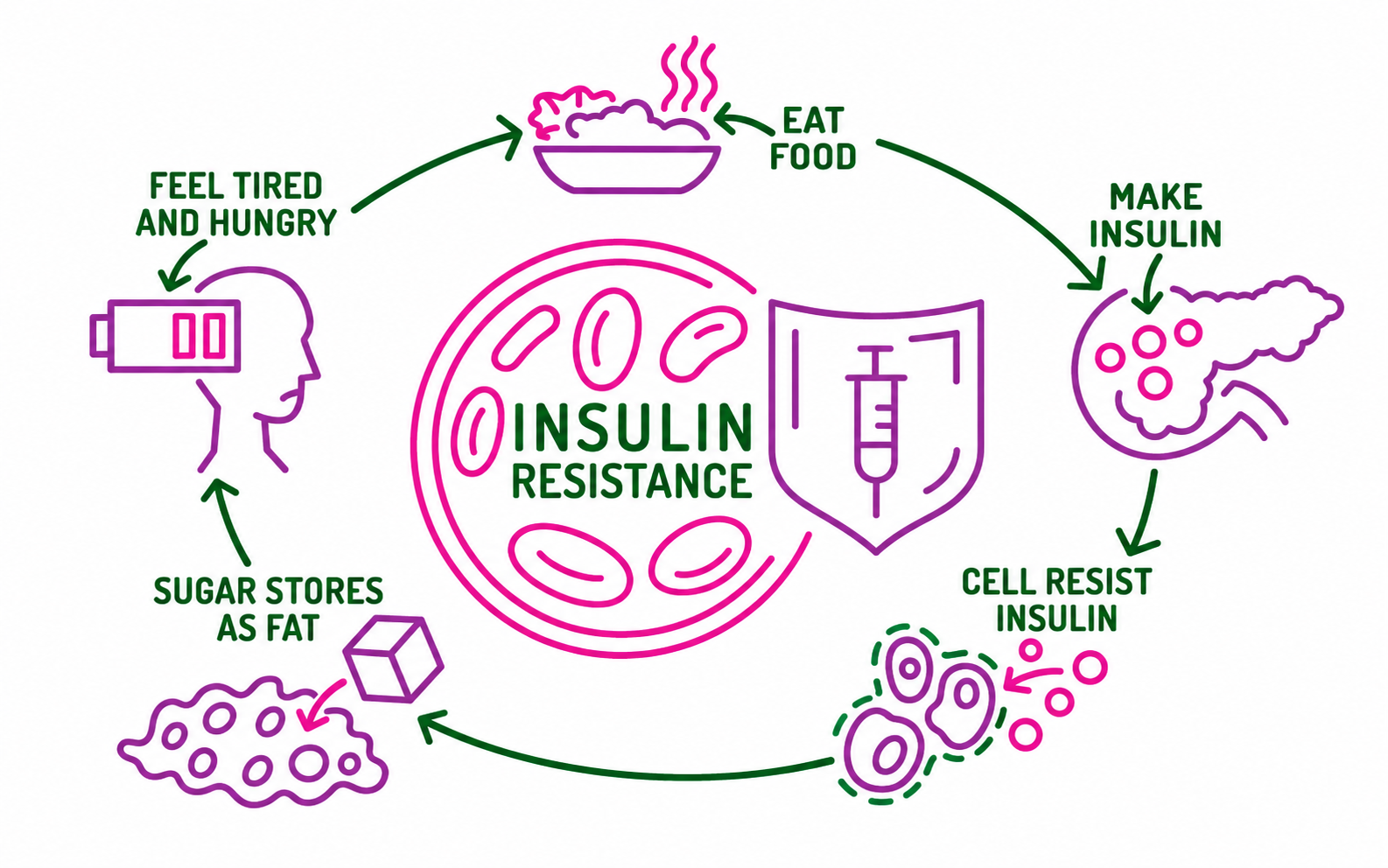
Let's make this simple. Insulin is a hormone that works like a key. After you eat, it unlocks your cells so sugar can move out of your blood and into your muscles and organs for energy.
Over time, with stress, poor sleep, inflammation, hormone shifts, too much processed food, and too little muscle, your cells start ignoring that key. Your pancreas responds by making more and more insulin to get the job done. This is insulin resistance.
Here is why it gets missed: for years, all that extra insulin can keep your blood sugar looking normal. Most routine checkups only look at fasting glucose, and sometimes A1c. Few check fasting insulin. So the problem is quietly growing while your numbers look acceptable.
Meanwhile, high insulin is doing its own damage. Insulin is a storage hormone. When it stays high, your body holds on to fat, especially around your midsection. It drives cravings and energy swings. It fuels inflammation. And it disrupts other hormones, which is why it is tied to PMOS (formerly PCOS) in women and low testosterone in men. Women who have been told their hormones are "just stress" may also want to read PCOS + Insulin Resistance: Why Calories Weren't Your Problem.
Signs Your Body May Be Asking for Help
You do not need every item on this list. Even two or three are worth a deeper look:
Energy crashes in the afternoon, especially after meals
Strong cravings for sweets or carbs
Weight that settles around your belly and will not budge
Feeling hungry again soon after eating
Darker, velvety skin on the back of the neck, underarms, or groin
New skin tags
Brain fog or trouble focusing
High triglycerides, low HDL (the "good" cholesterol), or rising blood pressure
Irregular cycles, PMOS, or stubborn weight in perimenopause
Low libido, low energy, or erection changes in men (read our Movember article)
A parent or sibling with type 2 diabetes
A history of gestational diabetes or a baby born over 9 pounds
Why "Just Eat Less" Has Not Worked for You
Calories matter, but hormones decide what your body does with them. When insulin is high, your body is in storage mode. You can cut and restrict and still feel stuck, exhausted, and hungry, because the root issue was never addressed.
This is why so many of the people who walk into our office have tried everything. Keto. Fasting. The apps. The shakes. They did not fail. The approach failed them. Read more in Your Body Isn't Broken: It's Asking for a Different Approach and Why Functional Medicine Is the Ultimate Game-Changer for Weight Loss.

What a Deeper Look Includes at LIV
When we evaluate blood sugar and metabolism, we look at the whole picture, not one number. Depending on your history, that often includes:
Fasting glucose and hemoglobin A1c
Fasting insulin, plus HOMA-IR (a calculation that shows how hard your body is working to keep sugar normal)
Full lipid panel, including your triglyceride to HDL ratio
ApoB and hs-CRP for heart risk and inflammation
Liver enzymes, since fatty liver often travels with insulin resistance (more on liver health)
Thyroid panel, vitamin D, magnesium, and ferritin
Sex hormones, including testosterone and estrogen, when symptoms point there
We also look at your sleep, stress, medications, family history, body composition, and how you actually live day to day. Then we walk through every result with you, line by line, so you understand what it means for your body and your symptoms.
How We Help You Turn It Around
Your plan is built around you, and it is specific. Here is what that can include:
Functional Medicine: We look for the root causes driving your insulin resistance, including gut health, inflammation, sleep, stress hormones, and nutrient gaps, and build a clear step-by-step plan.
Medical Weight Loss Program: A structured, medically supervised program focused on losing fat while protecting muscle, because muscle is one of your best tools for blood sugar control.
Peptide and GLP-1 Safety Program: When appropriate, GLP-1 medications such as semaglutide or tirzepatide can be powerful. We prescribe them with careful monitoring, protein and strength guidance, and a plan for what comes next, so results last.
Hormone Optimization: When perimenopause, menopause, or low testosterone is part of the picture, we address it, because hormones and blood sugar are deeply connected. Explore Women's Hormones and Men's Hormones.
Targeted Supplements: When your labs and history support it, we may recommend professional-grade options through our Fullscript dispensary, always reviewed against your medications.
Primary Care: We accept Cigna, Curative, and Tricare Select East for eligible primary care visits.
Lab Testing Without the Runaround: Want to start with your numbers? You can order labs and add a Lab Results Review with Dr. Tracy.
Three Things You Can Start Tonight
Walk for 10 minutes after dinner. Moving your muscles after a meal helps pull sugar out of your bloodstream. It is one of the simplest, most effective habits we know.
Change the order you eat. Start with your protein and vegetables, then eat your carbs last. Same plate, gentler blood sugar response.
Protect your sleep. Even one short night can make your body more insulin resistant the next day. Aim for a consistent bedtime and a dark, cool room. If you keep waking in the middle of the night, read Why Are You Waking Up at 3 AM?
Prediabetes Is Not a Life Sentence
This is the hopeful part, and it is real. Prediabetes can often be reversed. The landmark Diabetes Prevention Program found that modest weight loss combined with regular activity cut the risk of developing type 2 diabetes by more than half. Small, consistent changes, guided by the right data, add up.
If you have already been diagnosed with type 2 diabetes, there is still so much we can do. We work alongside your current care to improve your numbers, your energy, and how you feel in your body.
The best time to catch this was years ago. The second best time is now.
Frequently Asked Questions
What is the difference between insulin resistance and prediabetes? Insulin resistance is the earlier stage, when your cells stop responding well to insulin and your body makes extra to compensate. Prediabetes is when your blood sugar has started to rise above normal but is not yet in the diabetes range. Insulin resistance often comes first, sometimes by many years.
Can prediabetes be reversed? For many people, yes. Improving nutrition, building muscle, moving after meals, sleeping better, and losing a modest amount of weight can bring blood sugar back into a healthy range.
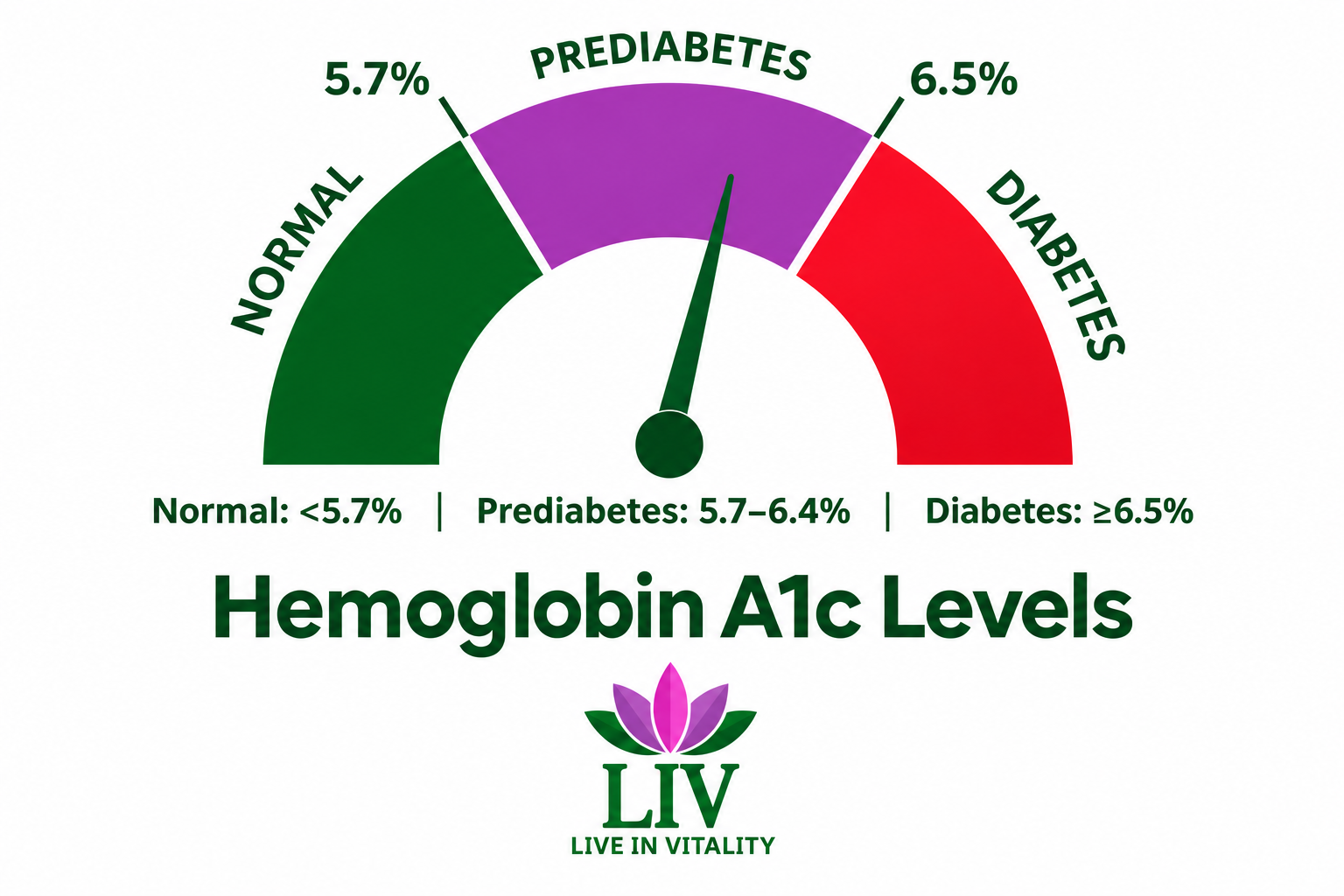
If my A1c is normal, am I in the clear? Not always. A1c reflects your average blood sugar over about three months, but insulin can be high for years while A1c still looks normal. A fasting insulin test gives a much earlier signal.
Do you offer GLP-1 weight loss in Brandon, FL? Yes. Through our Peptide and GLP-1 Safety Program, we offer medically supervised GLP-1 therapy when it is appropriate for you, with ongoing monitoring and a plan to protect your muscle and maintain your results.
Do you take insurance? We accept Cigna, Curative, and Tricare Select East for eligible primary care visits. Our specialty programs, including functional medicine and medical weight loss, are self-pay.
Your Next Step
If you are tired of being told your labs are fine while you feel anything but fine, we would love to meet you. We proudly serve Brandon, Riverview, Valrico, Fishhawk, Lithia, Apollo Beach, and the greater Tampa Bay area.
Book your visit at liveinvitality.net/book or call or text us at (813) 419-7911.
You are not doing this alone. We are in your corner.
Have a beautiful day and keep living in vitality. Dr. Tracy and Your Live In Vitality Team
This article is for educational purposes and is not a substitute for individual medical advice. Please speak with your healthcare provider before making changes to your medications or treatment.